Non-Gamban Casinos in the UK: What Access Means
 Available in GB
Gamban coverage, UK regulation and GAMSTOP are distinct, so accessibility alone does not establish a site’s status or suitability.
Table of Contents
- What “Not on Gamban” Actually Means
- Casinos Not on Gamban: The Limits of the Search
- How to Judge a Non-GamStop Casino Without a “Best” List
- Online Slots Outside Gamban: UK Rules Still Apply
- Casino Sites and Slots Not on Gamban: Check the Boundaries
- A Casino Without Gamban Is Not a Way Around Self-Exclusion
- Gamban-Free Casino Sites and Your Exclusion Options
- No Gamban Slots: Do Not Confuse Access with Permission
- Casinos Outside Gamban and the GAMSTOP Process
- Casinos Not Affected by Gamban: Consider Where You May Be Tempted
What “Not on Gamban” Actually Means
“Not on Gamban” describes whether a gambling website or app falls within Gamban’s blocking coverage. It does not tell you whether the operator is safe, suitable for you, or regulated in the UK. Those are separate questions, and the phrase answers none of them.
If a site is accessible while Gamban is active, the only reasonable conclusion is that Gamban is not blocking access to it in that situation. The phrase does not explain why. Nor does it establish that the operator has been assessed or approved by anyone. Treating access as a quality mark would be like mistaking an unlocked door for an invitation.
A blocker is not a licence check
Gamban and the UK’s formal online self-exclusion scheme have different roles. Gamban concerns blocking access through its service. GAMSTOP is a multi-operator self-exclusion scheme: it prevents registered players from accessing accounts with participating licensed online gambling websites and apps.
Casino Sites: UK Options and Key Differences
That distinction matters because a website’s relationship to Gamban does not determine whether it is covered by GAMSTOP. A site being accessible through one blocking service does not prove it is outside a formal self-exclusion agreement, and it certainly does not show that it is authorised to offer gambling to people in Britain.
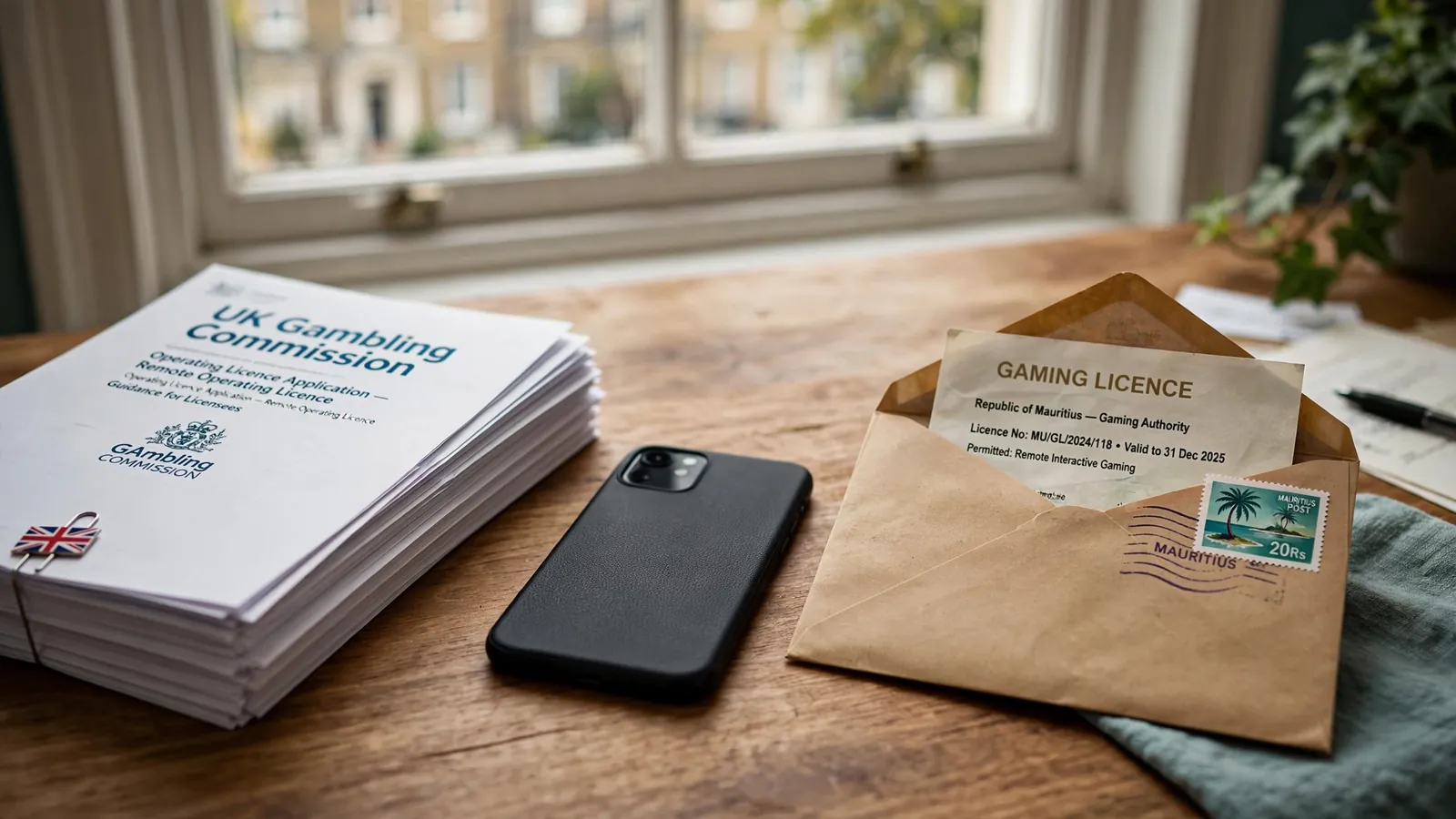
For online gambling operators serving the British market, the regulatory question is whether they hold the required UK Gambling Commission licence. A site’s visibility or accessibility tells you nothing conclusive about that status. “Not on Gamban” is not another way of saying “licensed”; it is not a licence category at all.
GAMSTOP is the formal scheme
GAMSTOP is Great Britain’s national online self-exclusion scheme. It lets players choose to exclude themselves from gambling with UK-licensed online casinos and other participating online gambling operators through a single scheme. The Gambling Commission made participation compulsory for online operators from 2020. As a result, regulated online casinos in the UK must prevent customers who have self-excluded from gambling with them.
This is a formal arrangement between the player and covered gambling businesses, not simply a description of which pages a blocker can reach. The two systems should not be treated as interchangeable: one site may be outside Gamban’s blocking coverage while the obligations attached to a GAMSTOP exclusion remain relevant to the operators covered by that scheme.
| The phrase or scheme | What it tells you |
|---|---|
| “Not on Gamban” | The site is accessible outside Gamban’s blocking coverage in the circumstances described. |
| GAMSTOP | A registered player is excluded from accounts with participating licensed online gambling operators. |
| UK Gambling Commission licence | The operator is authorised to serve the British market under the applicable UK regulatory framework. |
The distinctions are practical, not semantic. If you are checking whether an operator is regulated, assess its licensing status rather than relying on a blocker’s coverage. If you are considering what an existing self-exclusion means, look to the scheme and operators included in that agreement, not to whether a website opens.
What the phrase cannot promise
A casino described as a non-Gamban casino is not thereby safer, more responsible or more appropriate for your circumstances. The wording does not establish the operator’s licence, the protections it provides, or whether gambling there is compatible with an exclusion you have made. A list of accessible sites would not settle any of those matters either.
The same applies to slots. Calling a game a non-Gamban slot describes access in relation to Gamban’s coverage; it is not evidence that the game or the site has been checked for you. The label carries no assurance about an operator’s regulatory status or your eligibility to gamble.
A useful way to read the wording is narrowly: it says something about blocking coverage, and nothing more. Do not turn it into a safety rating, a regulatory endorsement, or evidence that a formal self-exclusion no longer matters. Access is not approval.
Best casino sites in the UK
- NightLuckBonus: Welcome Pack + 805% Up To 6400€ + 280 FS · Payout speed: 1-3 business days
- EvoSpinBonus: 125% up to €2500 + 125 Free Spins · Payout speed: 1-3 business days
- BeOnBetBonus: 100% up to €500 + 100 FS · Payout speed: 1-3 business days
- NightWinBonus: £900 + 400 free spins · Payout speed: 1-3 business days
- WinBeastBonus: €5000 + 500 FS + €650 Freebet · Payout speed: 1-3 business days
- BritsinoBonus: Welcome Package – Get your £2,200 + 2,000 FS · Payout speed: 1-3 business days
- SpinFormulaBonus: 550% Up To £15,000 + 550 FS · Payout speed: 1-3 business days
- AmunbetBonus: Join now and get 450% up to 2,700 GBP + 450 FS · Payout speed: 1-3 business days
- ZombillionBonus: Welcome Pack 250% up to £4000 + 200 FS · Payout speed: 1-3 business days
Casinos Not on Gamban: The Limits of the Search
A casino being described as “not on Gamban” tells you only that Gamban may not block access to it. It does not establish that the casino is safe, suitable for you, or authorised to serve people in the UK. Nor does it show that you are free to gamble there under an exclusion agreement you have already made.
Technical access to a site while using Gamban is not evidence that the operator is safe, approved, or legally permitted to serve UK customers.
That distinction matters because the wording can make a technical limitation sound like a recommendation. A site might be accessible through a device on which Gamban is installed, but access is not evidence that the operator has been checked or approved. A search for online casinos outside Gamban cannot, on its own, tell you what protections apply, whether an operator is legally permitted to serve UK customers, or whether gambling there conflicts with your own commitments.
Access is not authorisation
For real-money online gambling offered to customers in Great Britain, operators must hold the relevant UK Gambling Commission licence. Online gambling is legal in the UK only through licensed and regulated sites. A site’s relationship with a blocking tool does not change those requirements.
This is why “UK casinos not on Gamban” is not a meaningful category for deciding whether a casino is legitimate. The phrase describes a possible difference in software access, not a licence, regulatory status or consumer safeguard. An operator outside Gamban’s blocking coverage is not thereby exempt from UK rules if it is offering gambling to people in Great Britain.
Offshore sites without a UK Gambling Commission licence sit outside the UK regulatory system. Their presence on a list of casinos that a blocker does not stop would not make them UK-licensed or regulated. The label does not settle the question of legality; it simply does not provide the information needed to answer it.
Non-UK-Regulated Casinos: Licences and Risks
An exclusion is a separate commitment
Gamban and a formal self-exclusion agreement do different things. A blocker limits access through software. Self-exclusion is an agreement with a gambling business that you will not gamble with it for a set period. The venues and websites from which you have excluded yourself should refuse to serve you.
So, if you have self-excluded from an operator, finding a casino that is not blocked by Gamban does not cancel that agreement. The same applies if you are covered by a wider exclusion: a site being reachable is not permission to gamble there. A Non-GamStop casino could still put you in breach of the terms of an existing self-exclusion, depending on the agreement you made and where you choose to play.
Self-exclusion is a formal commitment not to gamble, and you remain responsible for keeping to it. That may sound less convenient than looking for an access workaround. It is also the point of the agreement.
Do not open another account elsewhere to get around an exclusion. A new registration does not undo the decision you made to stop gambling, and trying another site can deepen the gap between the protection you intended and what you are doing. If you have excluded yourself, treat that as the governing decision—not the fact that a particular site can still be reached.
What a “best” label cannot tell you
There is no useful “best casino not on Gamban” answer based only on whether software blocks access. A list might sort sites by accessibility, but that would say nothing about whether gambling is compatible with your circumstances or with an exclusion already in place. It would also risk presenting access as endorsement.
The phrase “no Gamban casinos” can be equally misleading. It may sound like a distinct class of casino, but it does not identify a shared standard or protection. Nor does it tell you that a site has been deliberately assessed for people who want to stop gambling. The absence of a block is not a safety feature.
Breach of Exclusion
Using an unblocked site to continue gambling despite a self-exclusion agreement can put you in breach of your formal commitments.
If your purpose is to continue gambling despite having self-excluded, do not treat an unblocked site as a route around the agreement. If you are unsure which businesses your exclusion covers, check the terms of the exclusion rather than testing access by registering or depositing. A technical barrier and a formal commitment answer different questions.
Search wording can group together sites that have little in common beyond the possibility of being accessible. That makes the label a poor basis for choosing where to gamble. The important distinction is not between a casino Gamban blocks and one it does not; it is between access and permission under the commitments and rules that apply to you.
How to Judge a Non-GamStop Casino Without a “Best” List
A ranking of non-GamStop casinos can look decisive while answering the wrong question. A site being accessible when Gamban is installed does not tell you whether gambling there fits your circumstances, or whether you have made a self-exclusion agreement that should prevent you from playing. Those are the criteria that matter before any comparison of operators.
If you have self-excluded from a gambling business, there is no useful “best” option among sites you can still reach. The relevant question is whether you should gamble at all, not which accessible casino appears most attractive. A technical gap in a blocking tool does not cancel an agreement you made with a gambling business.
Start with the decision that changes the answer
| Your situation | What should guide the decision |
|---|---|
| You have self-excluded from a gambling business | Do not treat another accessible site as a substitute. Your exclusion is the deciding factor. |
| You have not self-excluded, but gambling may conflict with your circumstances | Consider whether gambling is compatible with your finances, wellbeing and commitments before comparing operators. |
| You are unsure whether you can stick to a decision not to gamble | Do not use a list of casinos as a reason to open an account. Seek support or consider self-exclusion. |
This is a more useful comparison than a score assembled from features that cannot answer whether gambling is right for you. A “best” label has no stable meaning without a criterion. If the criterion is simply that a site is outside Gamban’s blocking coverage, it says nothing about whether playing there is suitable.
What self-exclusion requires from a business
Self-exclusion is not merely a setting that a customer switches on and then leaves the operator to interpret. Gambling businesses must offer customers a way to self-exclude. Once an agreement has been made, the business must close the customer’s account, return any funds held in it and remove the customer’s details from marketing databases.
The business must also take reasonable steps to prevent a self-excluded customer from gambling. That obligation is important when judging claims about access: a site being reachable through a device or outside a particular blocker does not establish that an excluded person is entitled to play. Nor does it make an attempt to get around the agreement a sound choice.
If you want to exclude yourself from a particular gambling business, the agreement is with that business. Treat it as a firm boundary, rather than as a preference that can be set aside when another site is available. If the operator has not acted on an exclusion or has continued to contact you with marketing, those are matters to raise through its complaints route; they are not reasons to seek another account.
Do
- Treat self-exclusion as a firm boundary
- Use official complaint routes for operator failures
- Close accounts and remove details from marketing
Don’t
- Seek another account when a site is available
- Treat exclusion as a preference to be set aside
- Use access as a reason to ignore a boundary
If you are comparing sites, compare the right thing
For someone who has not self-excluded, the first test is still personal rather than promotional: is gambling compatible with your current circumstances? A casino cannot answer that for you. A polished website, a familiar game or a persuasive offer does not change the effect gambling may have on your money or wellbeing.
Only after that question has a clear answer would an operator comparison have any value. Be precise about what you are comparing and why. “Best” could mean a feature that matters to one person and is irrelevant to another. A list that does not state a meaningful criterion is not a decision tool; it is decoration.
For someone with an active exclusion, however, the comparison ends there. Do not open another account elsewhere to work around an exclusion. If you are tempted to gamble despite an agreement, the sensible next step is to reinforce the boundary or seek support, not to search for a site the blocker does not cover.
That is less exciting than a league table. It is also the point. The useful measure is not how easily you can reach a casino, but whether gambling is compatible with your circumstances and any commitment you have made to stop.
Online Slots Outside Gamban: UK Rules Still Apply
Searching for online slots that Gamban does not block will not tell you whether a game is legal for you to play, or whether a particular operator follows UK requirements. Gamban’s coverage is not the measure of a slot’s regulatory status. For people in Great Britain, real-money online gambling is legal only with an operator holding the relevant UK Gambling Commission licence. An overseas location does not remove that requirement when a business offers gambling to the British market.
Non-GamStop Curacao Casino Sites: How to Assess
There is no reliable “best” choice based simply on whether a slot can be accessed while Gamban is installed. That describes a technical outcome, not a standard of quality, safety or legality. A list built around that criterion could not establish how the operator is licensed or whether its practices meet UK rules. Access is not a recommendation.
The rules for online slots
UK rules apply to online slots offered by UK-licensed operators. Autoplay is banned: you must start each spin yourself rather than setting a sequence to run automatically. Every spin must also take at least 2.5 seconds. These requirements are intended to shape how play takes place; they do not make a slot harmless or ensure that gambling is suitable for you.
Stake limits also apply to online slots at licensed operators. The maximum stake per game cycle is £5 for customers aged 25 and over, and £2 for customers aged 18 to 24. The £5 limit for all adults took effect on 9 April 2025. These limits are regulatory conditions, not a signal that spending up to the maximum is appropriate.
A legal operator must verify your age before allowing you to deposit into a gambling account. Remote operators must also prompt new customers to set a financial limit before their first deposit and provide account-level controls so limits can be accessed. These are checks and tools within a regulated service; they do not turn a search for accessible slots into a sound reason to gamble.
UK Slot Regulations
Licensed operators must ban autoplay, ensure spins take at least 2.5 seconds, and enforce stake limits of £5 (or £2 for players aged 18-24).
When comparing any online slot offer, the meaningful first distinction is not whether Gamban blocks it. It is whether the operator is licensed to serve customers in Great Britain and whether you are comfortable with the rules and controls that apply there. A site outside the UK regulatory system does not become compliant with British requirements because its games load or because a blocking program does not stop access. Nor can a game title or its apparent pace establish the operator’s status.
If you are looking for a slot that bypasses a block, pause before treating technical access as permission. A blocker’s coverage cannot settle whether gambling fits your circumstances. UK rules set minimum conditions for licensed play; they do not certify that a particular session is safe for you. A rule-compliant game can still lead to losses, and the presence of account tools does not require you to use them or prevent you from spending.
So there is no defensible “best online slot outside Gamban” on access alone. If the question is whether a slot follows British requirements, check the operator’s UK Gambling Commission status and the applicable controls—not whether the game appears through a blocker. A practical comparison starts with regulation, not reachability.
Casino Sites and Slots Not on Gamban: Check the Boundaries
A casino or slot game being accessible when Gamban is active tells you something about software access, not whether gambling is appropriate for you. A blocker’s coverage and a self-exclusion agreement are different boundaries: one concerns whether software restricts access; the other is a formal request not to gamble with the businesses you have identified.
Non-GamStop European Casinos: A UK Guide
That distinction matters if you are looking at casino sites or slots outside Gamban because you have excluded yourself from gambling. A gap in a blocker is not permission to play, and it does not cancel an agreement you made with a gambling business. The relevant test is not whether a page loads or a game opens. It is whether you have committed not to gamble with that business or venue.
Make the exclusion match the temptation
Self-exclusion is built around places where you might gamble. You identify the venues or online sites, register, provide personal details so your identity can be confirmed, choose a duration and receive confirmation. The list matters: an exclusion only addresses the businesses or venues included in the request.
If you are tempted by both online casinos and places you can visit in person, consider both when deciding where to exclude yourself. Do not treat a casino site’s absence from a blocker as a reason to leave it off your list. The useful criterion is coverage of your own likely points of access, not whether a particular slot appears to be blocked.
| Boundary | What it tells you |
|---|---|
| Gamban access | Whether its software blocks access to a particular site or game |
| Self-exclusion | Whether you have formally asked a gambling business or venue not to serve you |
The comparison is plain, but important. Software access can change what you can open; it does not rewrite an agreement.
An agreement has practical force
Self-exclusion is a formal agreement not to gamble, and you remain responsible for sticking to it. Gambling businesses must take reasonable steps to prevent a customer who has excluded themselves from gambling with them. That protection is tied to the exclusion, not to whether a blocking tool recognises every website or game.
So, if you have excluded yourself from a business, trying to reach it through a route that Gamban does not block does not make the agreement disappear. Nor does moving to another site address the underlying risk if that site is another place where you may be tempted to gamble. The absence of a software barrier is a technical detail, not a change in your commitment.
A practical check is to write down the places where you might gamble before acting on an urge to play. Include online sites as well as physical venues if both are relevant to you. Then compare that list with the places you have excluded yourself from. Any gap is a reason to consider the boundary you need—not an invitation to test the gap.
Verify Your Boundaries
- List all places where you might be tempted to gamble
- Compare this list with your active self-exclusions
- Identify any gaps in your exclusion coverage
- Request exclusion from any missing venues or sites
If you have already made an exclusion, avoid opening another account elsewhere to get around it. Treat access to UK slots outside Gamban in the same way: access alone does not establish that playing is compatible with your exclusion. Exclude yourself from every place where you may be tempted to gamble, rather than relying on a blocker to define the limits for you.
Software is not consent.
A Casino Without Gamban Is Not a Way Around Self-Exclusion
A casino’s absence from Gamban’s blocking coverage says nothing about whether gambling there is appropriate for you. If you have chosen to self-exclude, looking for a casino without Gamban is not a safe way to treat that decision as optional.
Self-exclusion is a request to a gambling business to stop you betting with it for a set period. You can register with GAMSTOP to self-exclude from participating online operators, or contact an individual online casino to exclude yourself from that business. Gambling businesses must offer self-exclusion, and customers who have excluded themselves should be refused service by the venues or websites covered by their agreement.
Non-UK-Registered Casinos: Licences and Risks
The relevant criterion is not whether a site can be reached from your device. It is whether you have made an exclusion that applies to the business, and whether gambling elsewhere would conflict with the terms you agreed to. Playing at another casino could breach your self-exclusion terms, even if Gamban does not block access to it.
Do not open another account elsewhere to work around an exclusion. That changes the route to gambling, not the reason you excluded yourself. If you have excluded yourself from one casino, keep the boundary in place rather than seeking a different operator. If you need wider online protection, GAMSTOP is the multi-operator route; direct self-exclusion is available for an individual gambling business.
For a practical check, write down which operators your exclusion covers and whether you are considering gambling at a business outside that scope. If the purpose of choosing another casino is to keep gambling despite an exclusion, stop there. Access is not permission.
A self-exclusion agreement is a commitment not to gamble with the business or businesses you selected. Treating a gap in device blocking as a reason to ignore that commitment creates a risk of breaching its terms. If you are unsure what your agreement covers, contact the relevant scheme or casino before taking any action. The sensible criterion is compatibility with your exclusion, not availability.
Access vs Permission
Technical accessibility via a blocker is not a substitute for, or a cancellation of, a formal self-exclusion agreement.
Gamban-Free Casino Sites and Your Exclusion Options
A casino being outside Gamban’s blocking coverage and being covered by a self-exclusion request are different things. Gamban relates to whether its software blocks access on your device. Self-exclusion is a request made to a gambling business or scheme to prevent you from gambling with the businesses covered by that request. A site’s absence from a blocker does not cancel an exclusion you have already made.
If you want to exclude yourself from one online gambling business, look for the Responsible Gambling or Safer Gambling section on its website or app and follow the self-exclusion instructions. If you cannot find them, contact customer services and ask how to make a self-exclusion request. The request applies to that business; it is not a substitute for a wider scheme.
For coverage across participating online operators, GAMSTOP provides multi-operator self-exclusion. Registering prevents access to current gambling accounts and the creation of new ones with covered operators across the UK, without a fee. The Gambling Commission requires online operators to participate in GAMSTOP. Gambling businesses must also provide a way for customers to self-exclude.
The practical distinction is scope. A direct request concerns one gambling business; GAMSTOP is designed to cover participating operators across the market. Neither is the same as a device blocker. If you are considering a casino that Gamban does not block, first check whether you have an active self-exclusion that applies to the business. Trying a site outside a blocker does not make an existing agreement disappear.
Anjouan Casino Licence in the UK: Legal Status
Choose the option by the coverage you need, not by whether a site is described as Gamban-free. If you have excluded yourself, do not open an account elsewhere to get around that decision. The relevant test is whether gambling is permitted under your own exclusion, not whether software lets you reach a page.
No Gamban Slots: Do Not Confuse Access with Permission
A slot game being reachable on your device does not mean you are permitted to play it under a self-exclusion agreement. Gamban is a blocking tool; its coverage is not the same as a formal exclusion imposed by a gambling business or through GAMSTOP. If a site is not blocked by Gamban, that fact says nothing about whether gambling there is compatible with an exclusion you have made.
UK-licensed online operators have been required to participate in GAMSTOP since 31 March 2020. They must block customers who have self-excluded, including preventing access to existing accounts and attempts to create new ones. Gambling businesses must also offer self-exclusion by law. A site that accepts you despite an active exclusion is not evidence that the exclusion no longer applies or that the play is authorised.
Do not treat slots outside Gamban’s blocking coverage as a workaround. Opening an account elsewhere to continue gambling could breach your self-exclusion terms. The practical test is not whether a game loads, but whether you have agreed to stay away from gambling and whether that agreement covers the operator. Access is a technical condition, not permission.
If you have already gambled while excluded, do not assume the Gambling Commission can return the money. The regulator does not provide refunds for money spent gambling. You can raise a concern about an operator’s handling of self-exclusion through the appropriate complaint route, but that is separate from recovering gambling losses.
Does Gamban coverage determine a site’s legality?
No, it only describes whether the software blocks access. Legality in the UK depends on whether the operator holds a UK Gambling Commission licence.
Can I get a refund from the Gambling Commission if I gambled while excluded?
No, the regulator does not provide refunds for money spent gambling.
Does a site accepting me prove my exclusion is over?
No, a site accepting a registration despite an active exclusion is not evidence that the exclusion no longer applies or is authorised.
Where the urge to play is driving you towards unblocked games, pause rather than testing which sites remain accessible. Review the exclusion you have in place and seek support if you are finding it difficult to stick to it. A blocker can help restrict access, but it cannot replace an exclusion agreement or make gambling outside its coverage safe.
No workaround.
Casinos Outside Gamban and the GAMSTOP Process
If you are considering self-exclusion, start with the gambling access you want to stop—not with whether a particular casino is blocked by Gamban. Gamban is a blocking tool; GAMSTOP is a formal scheme for excluding yourself from participating online gambling operators across the UK. They serve different purposes.
Registering with GAMSTOP is free. Once your identity has been verified and your exclusion is in place, you cannot access existing gambling accounts or create new ones with covered operators. The restriction applies across UK Gambling Commission-licensed gambling platforms for the fixed period you select. During that time, opening an account elsewhere to continue gambling defeats the purpose of self-exclusion.
The practical steps are straightforward: register with GAMSTOP, provide the information needed to confirm your identity, choose an exclusion period, and wait for confirmation. Keep the confirmation details so you know your request has been completed. A blocker’s coverage is not a substitute for taking this formal step if you want to exclude yourself from participating operators.
If you want to leave GAMSTOP
Removal is not handled by an individual casino. You must contact GAMSTOP directly and follow its process. Until the scheme confirms that your exclusion has ended, treat it as active; do not assume that a casino’s access or account status means you have been removed.
A request to end an exclusion is a significant decision, not a technical fix for access problems. If you are unsure whether to proceed, pause rather than testing access at another gambling site. The exclusion is there to prevent that route back.
Non-UKGC Licensed Casinos: Licences and Risks
GAMSTOP is the practical option when you want one request to cover participating online operators rather than approaching each business separately. If you are ready to self-exclude, use the official GAMSTOP service and read its instructions carefully before submitting your details. A casino being outside Gamban’s blocking coverage does not change what your GAMSTOP agreement requires.
Casinos Not Affected by Gamban: Consider Where You May Be Tempted
A casino that Gamban does not block is not automatically a suitable place to gamble. A blocker’s reach and a self-exclusion agreement do different jobs: one limits access through software, while the other is a formal request to gambling businesses to refuse your custom. Treating a gap in blocking as permission can undermine the boundary you intended to set.
Plan your exclusion around the places where you might actually be tempted, not only the site or venue you use most often. That may mean covering online gambling as well as land-based casinos, and considering other gambling venues too. Switching to a different casino or opening another account is not a reliable solution to an exclusion; it can put you in conflict with the terms you agreed to.
Online Casino Malta MGA Licence for UK Players
For online gambling, you can request exclusion from a single operator directly, or use GAMSTOP to exclude yourself across participating licensed online operators. For a land-based casino, ask at its customer service desk, or speak to the manager or another staff member at the venue. You may be asked to provide personal details so the venue can identify you and process the request. Keep a copy of any form you complete.
If you want to exclude yourself from all land-based casinos in the UK, SENSE provides the relevant scheme. For individual venues, make sure your request covers each place where you could be tempted; excluding yourself from one casino does not automatically cover another.
The practical test is straightforward: list the places where gambling could become an option, then make an exclusion request that covers them. If you are unsure where to start, use the operator’s responsible-gambling information for online accounts, ask venue staff in person, or contact SENSE about land-based casinos. Do not rely on whether a site appears in a blocker’s coverage as a substitute for a self-exclusion plan. Access is not permission.
How does self-exclusion work?
You choose the gambling venues or online sites to exclude yourself from, provide information to confirm your identity, and set an exclusion period. The businesses you exclude yourself from must refuse you service; for online gambling across participating UK-licensed operators, you can register with GAMSTOP.
How do I return from self-exclusion?
You must contact GAMSTOP directly to request removal. A 24-hour cooling-off period applies to every request, and operators may take a further 24 to 48 hours to update your status; you can cancel the request during the cooling-off period and keep your exclusion in place.
How does GAMSTOP benefit me?
GAMSTOP lets you exclude yourself, free of charge, from current accounts and prevent yourself from opening new ones with participating online gambling operators across the UK.
How long does it take for GAMSTOP to become active after sign-up?
After your identity is verified, the 24-hour cooling-off period begins, and your exclusion remains active throughout it.
Prepared by the Lucky Mister Casino editorial staff.